
Seating a wedding is not a booking system
Most plugins that mention seating are ticketing tools: rows of numbered seats that strangers buy one at a time. A wedding, a gala or an awards dinner is the opposite problem. Nobody buys a seat. One person decides where two hundred named guests sit, changes their mind eleven times, and needs to print the result.
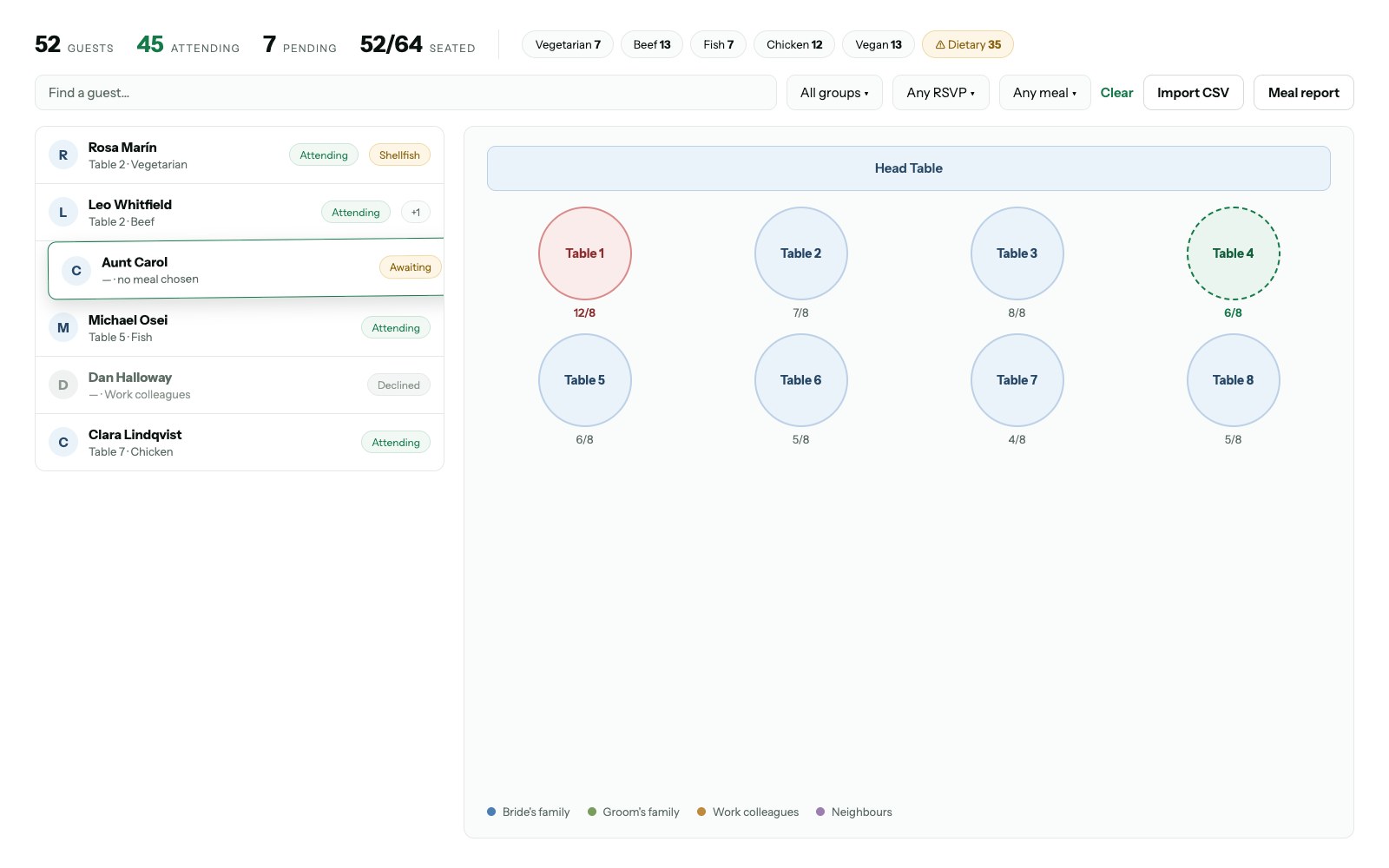
The two jobs are genuinely different
Ticketed seating is about preventing two people buying the same seat, and it optimises for many buyers acting at once. Event seating is about one person arranging known guests, and the hard parts are the ones ticketing never has to solve: this couple together, these two apart, the bride’s side on the left, table 6 has space for one more.
What actually takes the time
Not the drawing. The drawing is done once. The time goes into the twelfth revision, three days before, when a family cancels and four tables have to be rebalanced — and into producing, from that arrangement, the things other people need: a list for the caterer by dietary requirement, place cards in the right order, and a plan the venue can read.
That is the test to apply to any tool here. Not whether you can draw a nice chart, but whether you can change it late and get everything downstream to agree without redoing it by hand.
And it happens again next week
A planner or a venue does this repeatedly, with the same room and different guests. The room should be a template you reuse; the guests should not be. Tools built for a single event make you rebuild the venue every time.