
Renting something is not selling it, and WooCommerce only knows how to sell
WooCommerce has one idea of stock: you had ten, you sold one, you have nine. A rental returns. It is unavailable for a range of dates rather than permanently, it needs cleaning or charging before the next hire, and the price depends on how long somebody keeps it. None of that is a setting you can switch on.
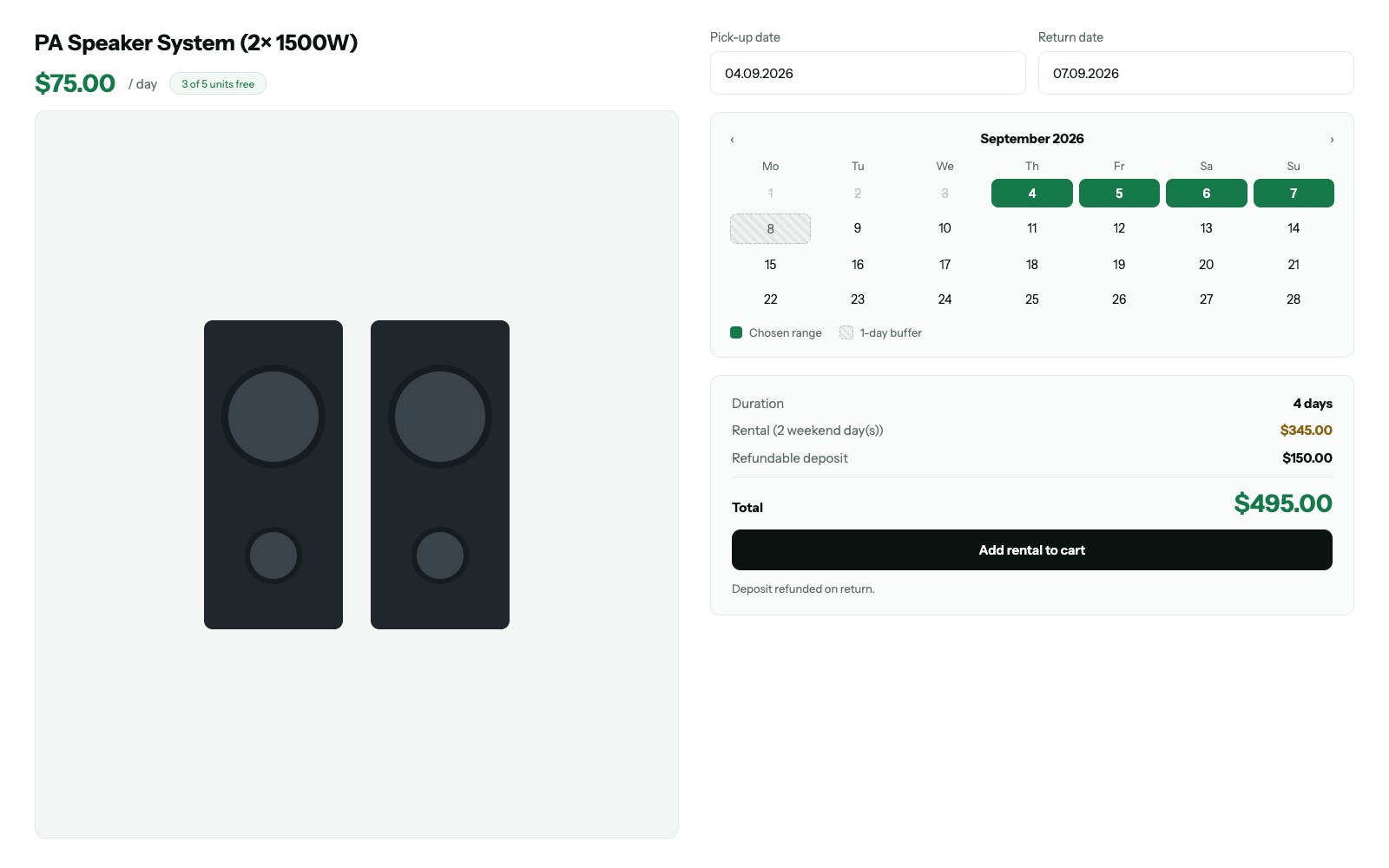
Availability is a range, not a number
The question a rental shop has to answer is “can I have this from Friday to Monday”, and the answer depends on every other hire of that item, not on a count. Two customers can both book the same camera in the same month without conflict; the same two cannot both have it on Saturday. A stock number cannot express that, which is why rental shops running on plain WooCommerce end up managing a spreadsheet beside it.
The gap between hires is part of the booking
A marquee comes back dirty. A power tool needs charging. A car needs cleaning. If the calendar allows the next hire to start the hour the last one ends, the shop has sold something it cannot deliver, and the person who finds out is the customer standing at the counter. A turnaround buffer is not a nicety; it is the difference between an availability calendar and a promise.
Pricing by time, and where it gets awkward
Daily rates are simple until somebody wants four hours, or eight days when your week rate is cheaper than seven days. Real rental pricing is a small set of rules — an hourly rate up to a threshold, then daily, then a weekly rate that undercuts seven days — and it has to be applied on the server, because the customer choosing the dates is also the person who benefits from getting it wrong.
Deposits are the other half. A deposit is not part of the hire price; it is a separate amount you take and give back. Modelling it as a fee makes your revenue reports wrong and your VAT return wronger.