
Group buying only works if the discount is a promise you can keep
The mechanic is simple to describe and awkward to build: the price falls when enough people buy. The awkwardness is in the middle — the period where somebody has paid the higher price and the group has not filled yet, and you owe them either a refund or an explanation.
Decide what happens to early buyers first
There are only three honest answers, and you have to pick one before you launch. Everybody pays the final price and early buyers are refunded the difference. Or everybody pays the price at the moment they bought, and joining early costs more. Or nobody is charged until the group closes, and the campaign is an authorisation rather than a sale.
Each has consequences. Refunds cost you the payment fee twice and confuse your reporting. Charging at the time of purchase is simplest but makes early buyers feel punished, which is the opposite of what the mechanic is for. Delayed capture is the fairest and the most work.
And what happens if it does not fill
A campaign that misses its threshold is the case everybody forgets to design. Do the buyers get the product at the price they paid, or is the whole thing cancelled and refunded? Whatever the answer, it has to be on the page before somebody buys, in the same words you will use when you have to do it.
The counter has to be real
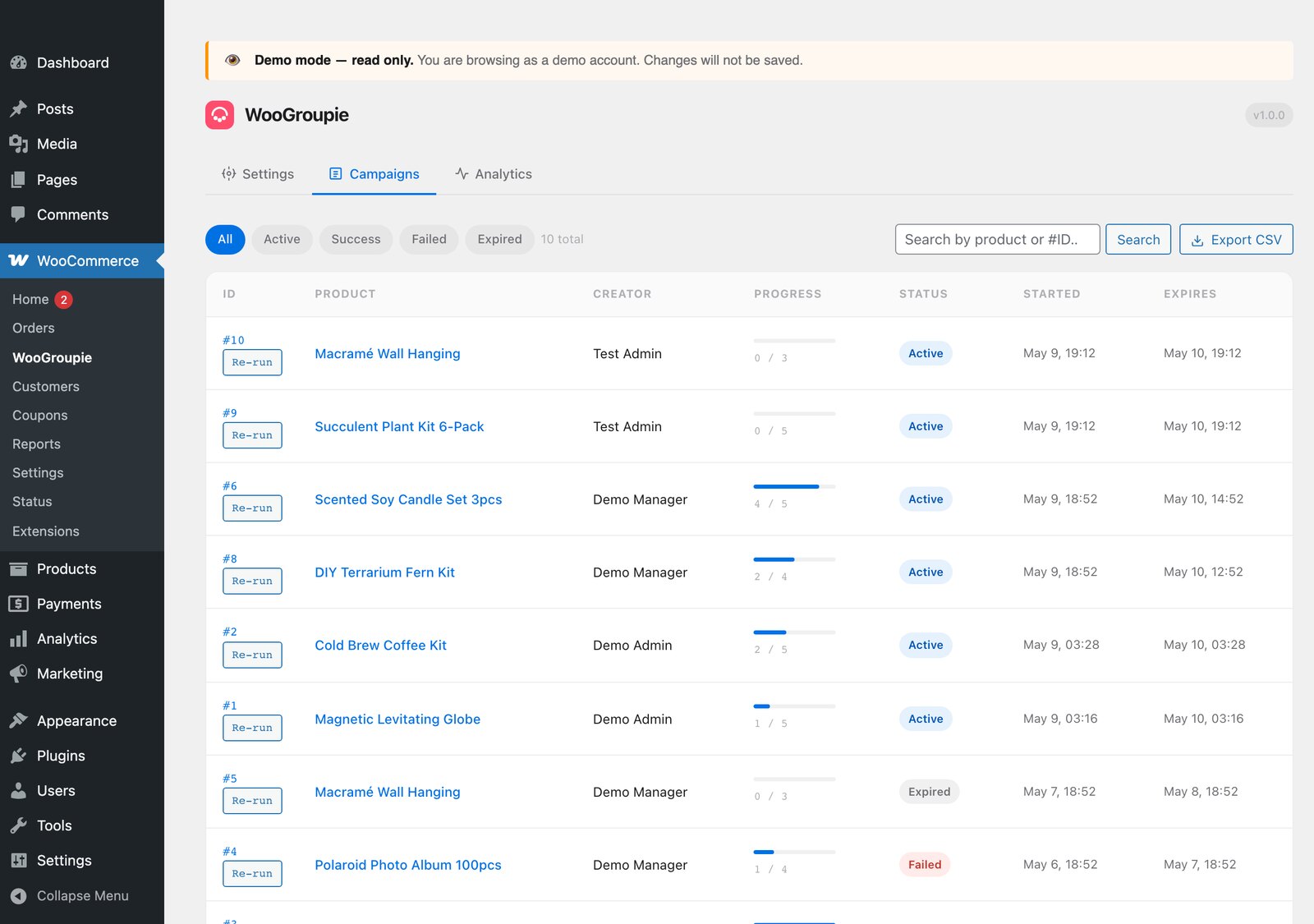
A progress bar that does not move is worse than no progress bar, and one that moves when it should not is worse still. Count paid orders, not carts, and do not count an order that was later refunded. If the number can go down, let it go down — a campaign that only ever climbs is one nobody believes twice.